Some words describe an idea. And some words propose a way of acting.
Ayni is one of them.
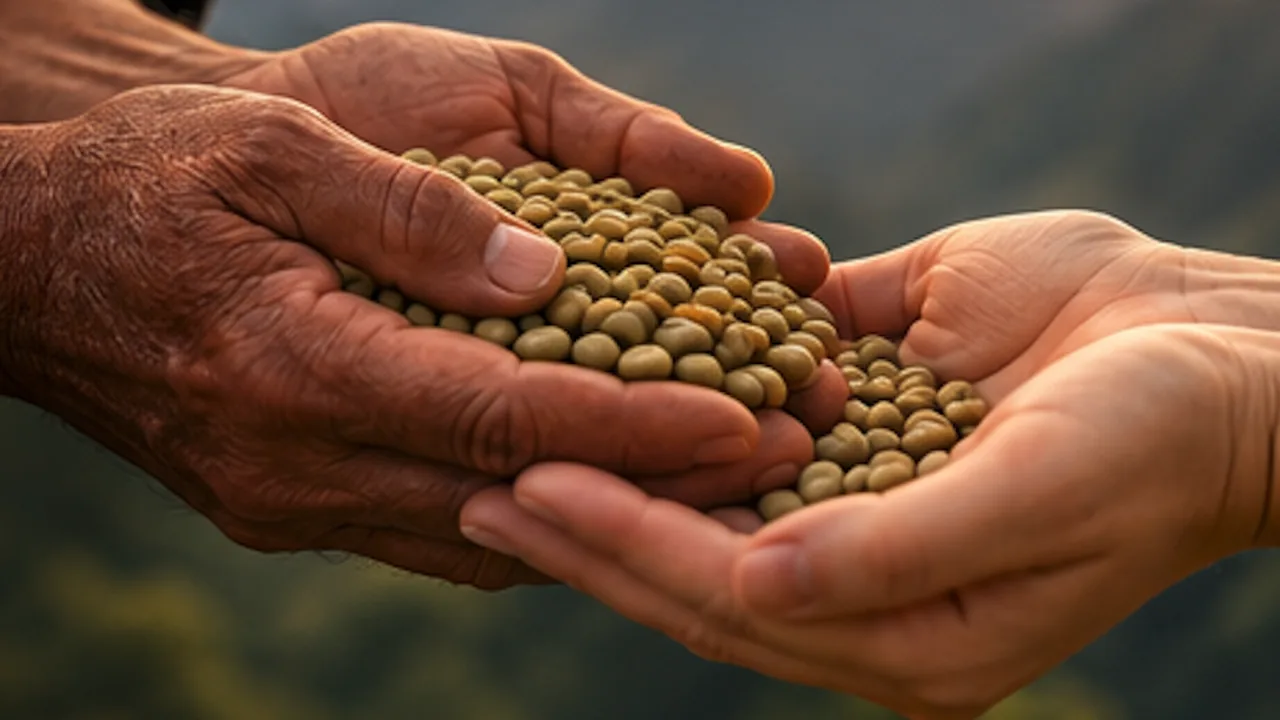
In Andean thought, Ayni is related to reciprocity: a form of collaboration based on giving, receiving and giving back. It is not only about exchanging something, but about understanding that relationships are built through mutual contributions.
At THE AYNI PROJECT we take this idea as inspiration for the way we understand international trade.
Because connecting a product with a market should not only be about moving goods from one place to another. It should also be about understanding their origin, recognising the work behind them and seeking relationships in which the parties can build value.
Ayni: more than an exchange
An exchange can end when a product is delivered and a payment is received.
Reciprocity invites us to think of something that continues: a relationship, a collaboration, a trust that develops over time.
This idea is especially relevant to us when we talk about coffee.
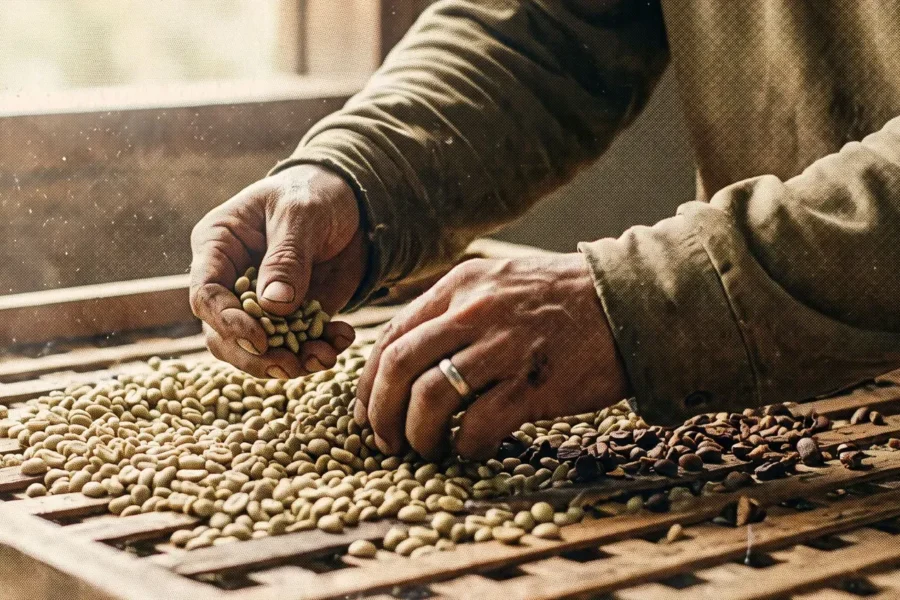
Behind every lot there are producers, farming decisions, post-harvest processes, technical knowledge and people working so that the product reaches its next stage.
On the other side there are roasters, importers, distributors and buyers looking for coffees able to meet specific needs.
Between those two worlds there is an opportunity for connection.
But for that connection to work, both sides must understand what each one contributes, what it needs and which conditions make a real collaboration possible.
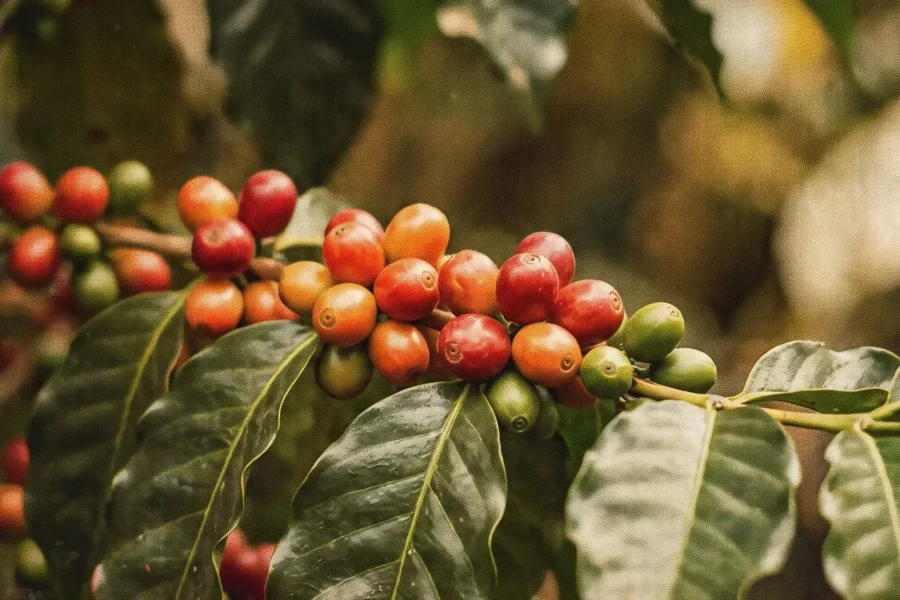
Coffee teaches us that origin matters
When we taste a coffee, we perceive one part of a much wider story.
The cup is the result of many factors: cultivation, harvest, processing, drying, storage, roasting and brewing.
Yet the product does not speak on its own for all the people who have taken part in its journey.
That is why getting to know the origin also means asking questions. Who produces it? What do we know about its process? What information can be shared with the buyer? What opportunities exist for that coffee to find the right market?
We will not always have all the answers from the very first moment. Precisely for that reason, listening and learning are part of the process.
From curiosity to collaboration
At THE AYNI PROJECT we define ourselves as Product Hunters: we look for products with origin, character, quality and commercial potential.
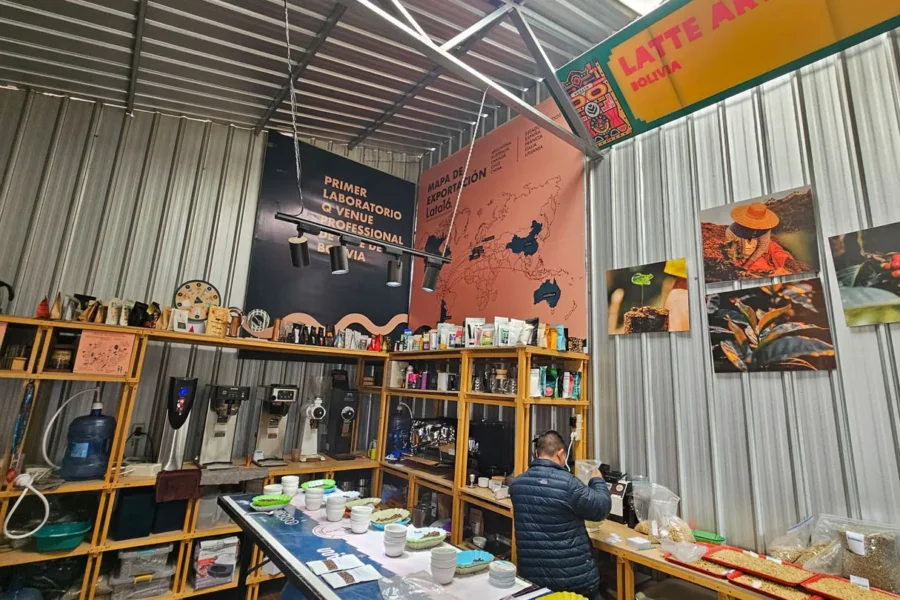
In coffee, that means exploring origins, getting to know those who work with the product, evaluating samples, studying the available information and understanding what may be interesting for each market.
Not every coffee will suit every buyer. Nor will every commercial relationship develop in the same way.
Our work is to find where a real opportunity for connection exists.
And for that we need to combine curiosity, judgement and communication.
A reciprocity that looks in both directions
Our commercial vision connects Europe and Latin America.
On one side, we explore opportunities to bring coffees of Bolivian origin to European markets. On the other, we look for coffees from other origins that may find opportunities in Bolivia and other Latin American markets.
We also explore Andean products that could make sense in the Bolivian market.
We do not see these connections as a one-way journey. We want to build relationships where each party has something to contribute and where collaboration can open possibilities that, separately, might not exist.
That is the idea we want to express when we talk about Ayni.
Seven principles for one way of working
Our philosophy comes down to seven principles:
- Honour the Origin. Everything has a place where it begins. Honouring the origin means recognising the land, the time and the people that make a product special.
- Stay Curious. What is special is waiting to be discovered. We explore without assuming we already know all the answers.
- Tell the Story. When something travels, so does its story. We seek to understand the product and to share the information that makes it possible to assess its origin.
- Connect Worlds. The best things happen between worlds. We connect people, cultures, regions and opportunities.
- Make Ayni. Give. Receive. Give back. We understand collaboration as a relationship in which each contribution can generate another.
- Keep It Going. What we share continues. A conversation can become a relationship; a relationship, a lasting collaboration.
- Be Part of It. Ayni only exists when it is shared. We look for people and organisations willing to build from curiosity, respect and collaboration.
These principles are not an automatic guarantee that any commercial operation will work. They are a guide for deciding how we want to work and what kind of relationships we want to build.
Some things are meant to be shared
For us, coffee is a starting point.
It lets us explore origins, learn from producers, understand processes and connect products with buyers who are looking for more than a line in a catalogue.
But the idea of Ayni goes beyond a product category. It is an invitation to see trade as a relationship between people and markets, where knowing the origin and understanding the needs of others can open new opportunities.
We explore. We curate. We connect.
But above all, we make AYNI.