Caranavi: where Bolivian coffee begins to find new paths
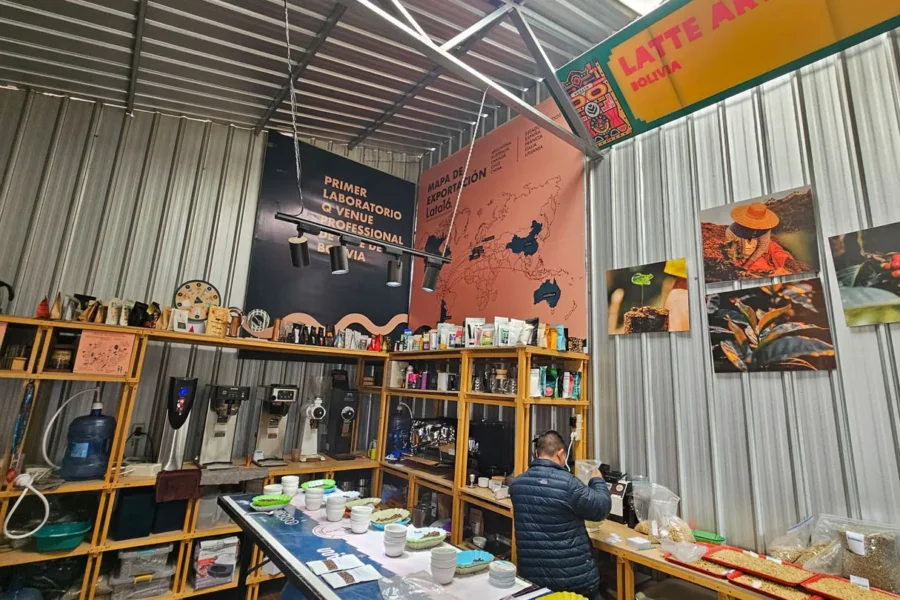
A visit to a coffee plant in Caranavi, in the Yungas of La Paz: a first commercial and technical approach to get to know the origin, its capabilities and the opportunities that…
Read article →Blog · Coffee
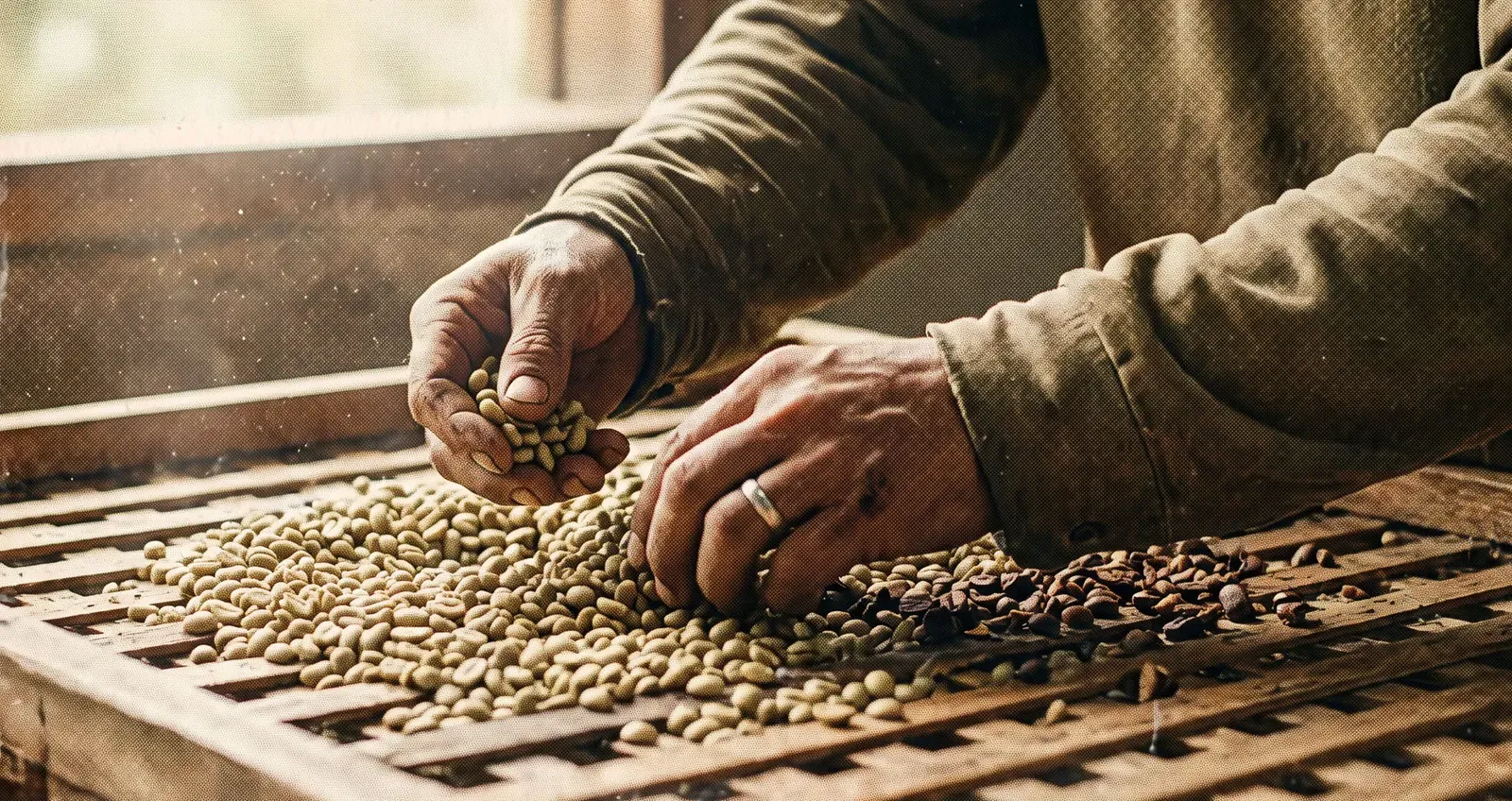
A coffee can catch your attention for its origin, impress during a cupping and still not be the right one for a buyer.
In the specialty green coffee business, choosing well means looking beyond a score, an attractive label or a description full of sensory notes. It means understanding what we are buying, where it comes from, how it has been handled and what possibilities it offers for the business that adds it to its selection.
For a roaster, an importer or a professional buyer, the decision has to combine quality, verifiable information and commercial viability.
At THE AYNI PROJECT we understand coffee sourcing as a process of discovery and selection. It is not about finding the most eye-catching coffee, but about identifying the one that makes sense for a specific need.
Knowing that a coffee comes from Bolivia, Ethiopia or Colombia gives important information. But the country of origin alone does not define what a cup will be like.
Within a single country there can be significant differences between regions, farms, varieties, harvests, altitudes and processing methods.
That is why, when we evaluate a coffee, we try to dig into the information available:
The more specific and verifiable the information, the better we can understand the product and communicate it to customers.
Traceability should not be a decorative word on a commercial sheet. It should state what information we can confirm and how far we can follow the journey of that coffee.
Post-harvest processing influences how the coffee develops and the characteristics that may appear during sensory evaluation.
A washed, a natural and a honey coffee can express different profiles even when they share certain origin factors. We explain this in more detail in Coffee processing methods: washed, natural and honey.
That is why knowing the process is essential to interpret the product. But we should not assume that a method automatically guarantees a certain quality or a specific flavour.
Cupping and lot evaluation are needed to check what we actually have in front of us.
A commercial description can spark interest, but a sample lets you move from promise to evaluation.
For a professional buyer, a green coffee sample raises several questions:
The evaluation should use appropriate criteria and comparable conditions. If several lots need to be compared, it helps to keep a consistent procedure so that the differences observed are useful.
An attractive sample does not prove on its own that supply will be consistent over time. That requires additional information about the lot and the ability to supply it.
Specialty coffee cupping makes it possible to evaluate different dimensions of the product.
Among the aspects usually observed are:
Cupping notes — citrus, flowers, chocolate, fruit or other references — are sensory descriptions, not added ingredients.
What matters is not to turn an isolated note into the complete definition of a coffee. A buyer should assess the profile as a whole and its fit for the intended use.
A coffee can be interesting from a sensory point of view, but it is also necessary to understand the conditions under which it could be sold.
Before moving forward, a buyer should clarify:
Not all of this will be available in the first conversation. What matters is to identify it and to know what is missing before committing to an operation.
There is no single ideal coffee for every buyer.
A roaster may look for a profile that complements their menu. Another may need a selection with a distinctive origin. An importer may prioritise availability, documentation and the ability to build a supply relationship.
The work of specialty coffee sourcing is to connect these needs with products that make sense in terms of origin, quality, information and commercial conditions.
At THE AYNI PROJECT we look for exactly that meeting point: coffees that deserve to be discovered and opportunities that can be built from a rigorous evaluation.
If you are a roaster, importer, distributor or producer and want to explore new possibilities, we would like to hear about your needs and discover what connections we can build.
Keep reading
A visit to a coffee plant in Caranavi, in the Yungas of La Paz: a first commercial and technical approach to get to know the origin, its capabilities and the opportunities that…
Read article →Two coffees from the same region can surprise us in very different ways. Washed, natural and honey: what changes in processing and how to read it on a coffee sheet.
Read article →Give, receive and give back. The Andean principle of reciprocity that inspires the way we understand the coffee trade and connect producers, origins and markets.
Read article →